
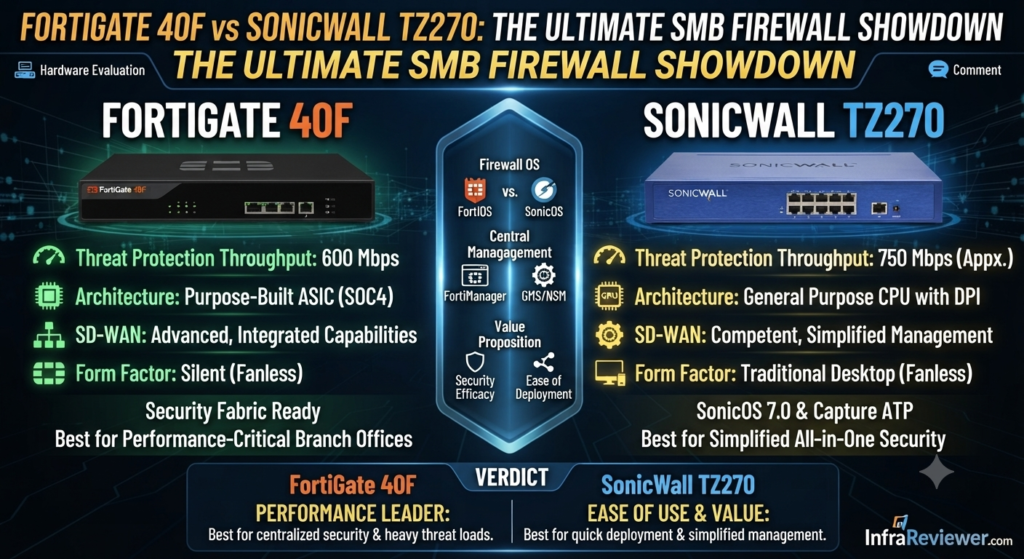
For small-to-medium businesses (SMBs) and distributed enterprises, selecting an entry-level Next-Generation Firewall (NGFW) usually comes down to two major players: Fortinet and SonicWall. Both brands promise enterprise-grade security at a price point that won’t break the bank, but their architectural approaches and real-world performance metrics vary significantly.
If you are setting up a remote branch office, a small retail space, or upgrading your home lab network, you’ve likely narrowed your choices down to the FortiGate 40F and the SonicWall TZ270.
Affiliate Disclosure: InfraReviewer is a professional review site. If you make a purchase through the links on this page, we may earn a small referral commission at no additional cost to you.
The Quick Verdict: Which one should you pick?
If you prioritize raw throughput speed, superior SSL inspection, and a centralized management interface (FortiOS), the FortiGate 40F is the clear winner.
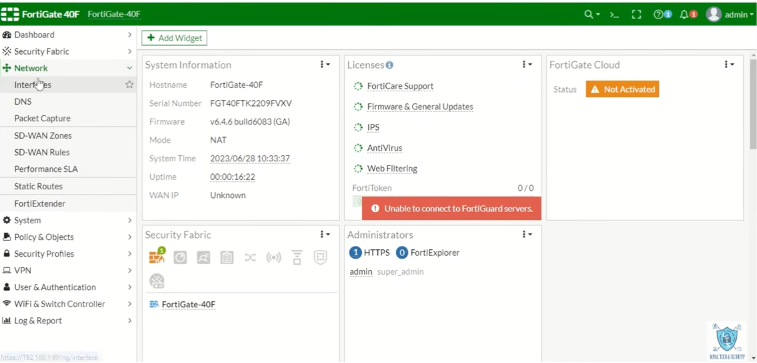
However, if your network setup requires more physical copper ports (8 vs 5) out of the box without deploying an additional switch, the SonicWall TZ270 is a highly capable alternative.
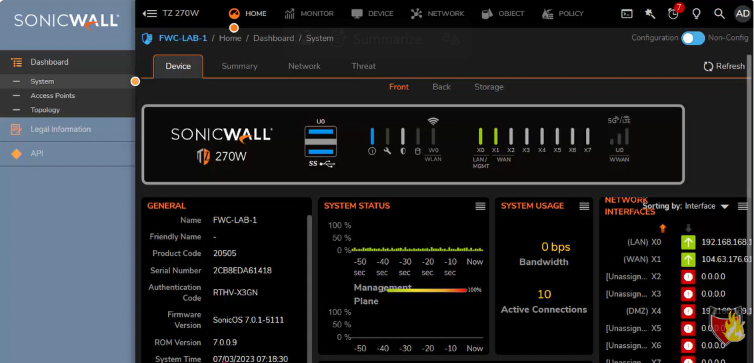
Raw Performance Showdown: Throughput Metrics That Matter
When evaluating a firewall for a modern office, relying solely on “Stateful Firewall Throughput” is a mistake. Once you turn on deep packet inspection, antivirus scanning, and Intrusion Prevention Systems (IPS), performance drops.
Here is how the FortiGate 40F and SonicWall TZ270 stack up based on official engineering datasheets:
| Performance Metric | Fortinet FortiGate 40F | SonicWall TZ270 | Real-World Impact |
| Firewall Throughput | 5.0 Gbps | 2.0 Gbps | Basic packet filtering speed |
| IPS Throughput | 1.0 Gbps | 1.0 Gbps | Inspecting traffic for known exploits |
| NGFW Throughput | 800 Mbps | 600 Mbps | Application control + IPS active |
| Threat Protection | 600 Mbps | 600 Mbps | Full security suite active (AV + IPS + Cloud) |
| SSL Inspection (Deep) | 310 Mbps | 300 Mbps | Decrypting and scanning HTTPS traffic |
| Interfaces (Ports) | 5x GE RJ45 | 8x 1GbE | Physical device connectivity |
The Throughput Reality: Why FortiGate Takes the Edge
Looking at basic firewall throughput, the FortiGate 40F boasts a massive 5.0 Gbps compared to SonicWall’s 2.0 Gbps. This is largely due to Fortinet’s proprietary SOC4 (System on a Chip 4) ASIC hardware acceleration. Instead of relying solely on a generic CPU to process network traffic, Fortinet uses dedicated silicon to handle encryption and packet processing.
However, the gap narrows significantly when you enable full security services. In standard Threat Protection mode (with Antivirus, IPS, and Application Control running), both firewalls level out at 600 Mbps.
If your office has a 500 Mbps or 1 Gbps fiber internet connection, both devices will handle standard operations well, but the FortiGate 40F provides more headroom if your internal LAN routing passes through the firewall.
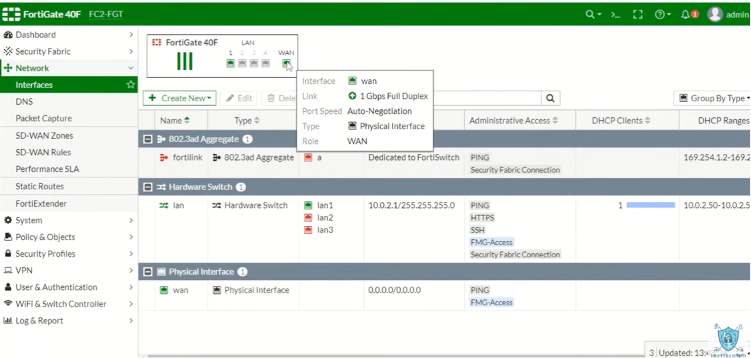
Physical Connectivity: SonicWall’s Saving Grace
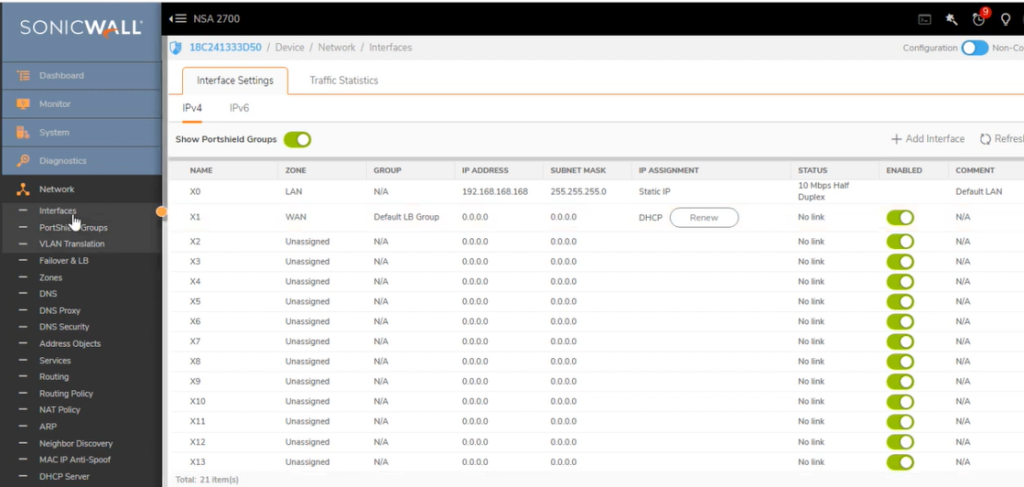
Where the FortiGate 40F cuts corners, the SonicWall TZ270 shines. The FortiGate 40F only offers 5 physical Gigabit Ethernet ports (typically configured as 1x WAN, 1x DMZ, and 3x internal switch ports). If you have a small office with 6 wired devices, you will be forced to buy an external network switch.
The SonicWall TZ270 provides 8 physical 1GbE ports. This allows for much greater deployment flexibility out of the box, allowing you to separate LAN, guest Wi-Fi access points, and VoIP phones into dedicated physical zones without immediate secondary hardware costs.
Licensing, Subscriptions, and Total Cost of Ownership (TCO)
When buying enterprise hardware, the upfront box cost is only a fraction of your investment. Both Fortinet and SonicWall operate on a subscription model for security updates, hardware warranties, and support. If your license expires, these boxes turn into standard layer-4 routers, losing their next-gen inspection capabilities.
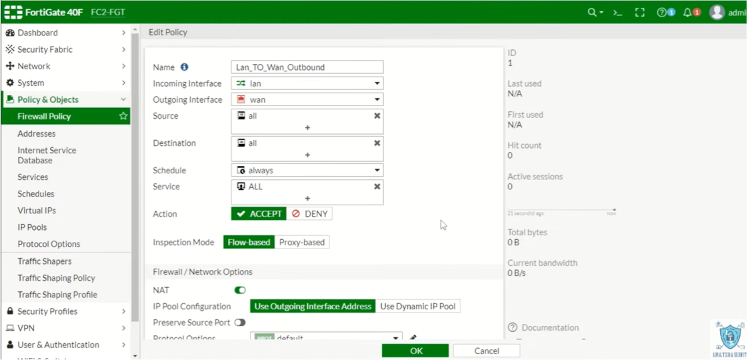
Fortinet’s Model: Fortinet typically sells the hardware bundled with the Unified Threat Protection (UTP) license. While renewal licenses can be pricey (often costing up to 60-70% of the initial hardware cost annually), Fortinet allows you to manage basic firewall features and manual routing even if your support bundle lapses.
SonicWall’s Model: SonicWall offers Essential Protection and Advanced Protection service suites. Upfront, a SonicWall box bundle is often slightly cheaper than Fortinet in the US market, making it highly attractive for hard budget caps. However, their multi-year renewal options require careful tracking, as upgrading or renewing individual services outside of a bundle can lead to complex licensing terms.
Final Verdict: Which Firewall Should You Deploy?
Both the FortiGate 40F and SonicWall TZ270 are elite entry-level firewalls that easily outperform generic consumer routers, but they serve different operational needs.
- Choose the Fortinet FortiGate 40F if: You need maximum throughput performance with SSL decryption active, prefer a mature command-line interface, and want industry-leading security analytics.
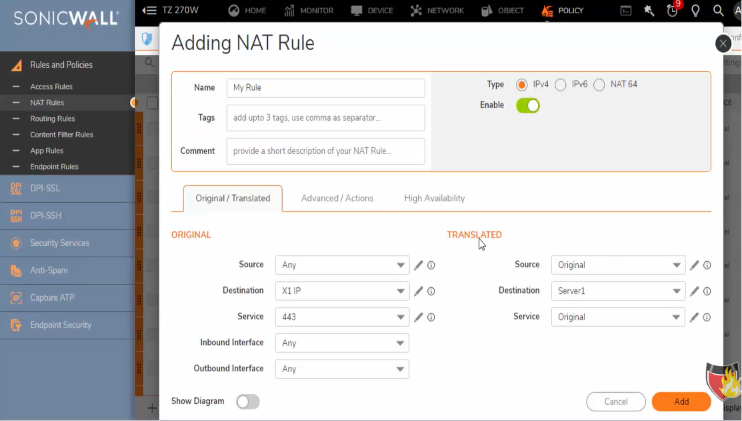
- Choose the SonicWall TZ270 if: You have limited physical space and need 8 built-in copper ports immediately without purchasing an external network switch, and you prefer a heavily visual dashboard.